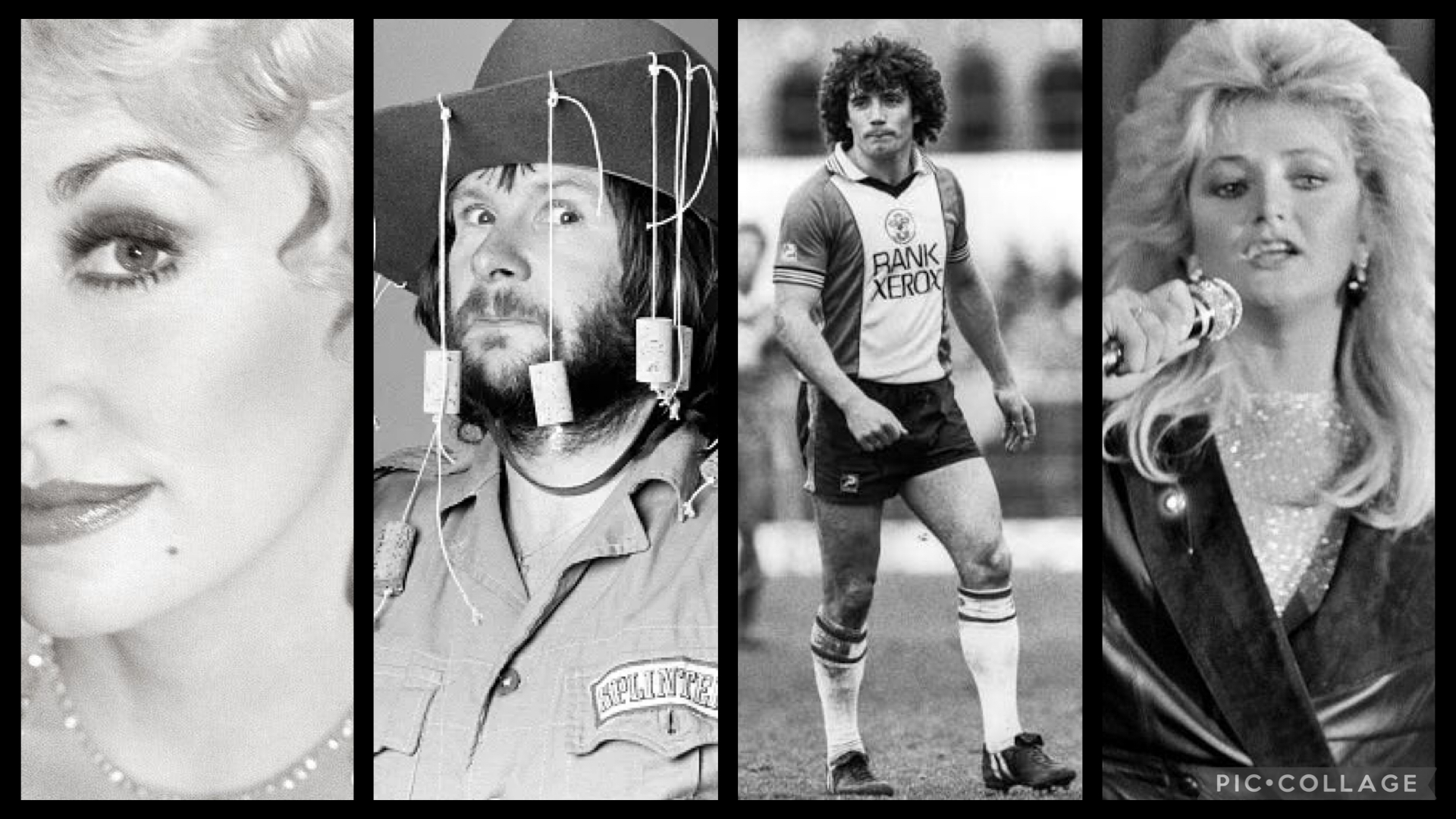
It started with Dolly.
When news broke of her death, I found myself more affected than I expected to be for someone I’d never met. I realised she wasn’t the only one in the past couple of months. Bill Oddie, Kevin Keegan, Bonnie Tyler in July. Four very different lives, four very different kinds of grief rippling out to people who never shook their hand. That had me looking into the research – and once I started, I realised it’s surprisingly normal.
If you’ve felt winded by any of this, there’s a name for what you’re experiencing. Researchers call it parasocial grief – mourning someone you knew only through a screen, a stadium, or a speaker. And the research is clear on one thing: it’s not a lesser grief. Bereavement scientists studying the phenomenon describe it as looking remarkably similar to grieving someone in your own life, with comparable intensity. One study went further, finding that what determines the depth of grief isn’t whether the relationship was one-sided, but how close it felt – meaning a childhood hero can hit harder than losing an acquaintance ever would.
Dolly Parton: the one who made kindness look effortless
Dolly’s death has hit differently for a lot of people, and for me it comes down to two things – her devotion to literacy and her commitment to being entirely herself. She could have simply been mega rich and let that be the whole story. Instead, she built the Imagination Library, sending free books to children worldwide, and made improving children’s lives part of her legacy rather than an afterthought. Psychologists studying celebrity grief note that this kind of “felt closeness” – the sense that a public figure’s values are genuinely theirs – deepens the parasocial bond considerably.
Dolly wasn’t just misunderstood by people who judged her on looks alone – she said so herself, and turned that misunderstanding into a song.
“I’ve always been misunderstood because of how I look
Backwood Barbie
Don’t judge me by the cover cause I’m a real good book”
Bill Oddie: the one who taught us to look up
The Goodies was where Oddie first put himself on my radar – his humour, alongside Tim Brooke-Taylor and Graeme Garden, was unmistakable. His love of nature and birding came into view for me later – I once lived with a bloke who used to go birding with Oddie in Kent, which made his TV persona feel oddly close to home. One time we were holidaying with friends on the Isles of Scilly – we were on Tresco on the same day Oddie was – the friends’ sons walked round the isle calling “B’loddie” in hope of meeting him.
For a generation who grew up with Springwatch playing in the background of family life, Oddie wasn’t a stranger. He was the funny, sometimes spiky uncle-figure who made watching a garden feel like an event.
Psychologists point to this as one root of parasocial grief – when someone becomes woven into the rhythm of your ordinary days, or brushes close to your own circle, their absence leaves a gap that feels more personal than it perhaps you expect.
Tributes remembered him for more than comedy or nature TV. As one put it:
” He encouraged us to respect and protect the environment. He taught us the wonder of it. He led the way and people of all ages and backgrounds responded to his call.”
David Foster
Kevin Keegan: the hometown boy who made a nation feel something
There’s a particular flavour of this grief when the person is local. Keegan was born in Armthorpe and started his career at Scunthorpe United – both a stone’s throw from here – before becoming a two-time Ballon d’Or winner and one of English football’s most emotionally open figures.
For Doncaster, his death carries an added layer – the loss of a piece of local pride, not just a footballing great.
Keegan’s own definition of the game he loved teaches us as much about living life as it does about scoring goals:
“What is success? It isn’t only about winning, but playing in a certain way.”
Kevin Keegan
Bonnie Tyler: the voice that scored our biggest moments
“Total Eclipse of the Heart” is one of the powerful song memories of my early teenage years – the kind of track that gets stitched into a specific age and feeling so tightly that hearing it again pulls you straight back there. When an artist’s music has done that for you, their death brings that memory rushing back alongside the loss of a stranger you never met.
There’s a restlessness in her most famous lyrics that a lot of people my age recognise instantly – that pull toward something bigger than an ordinary Tuesday.
“Every now and then I get a little bit restless
Total Eclipse of the Heart
And I dream of something wild.”
Feeling this is not too much
If any of these deaths landed harder than you expected, that’s worth sitting with rather than dismissing. You don’t need a personal relationship to have a real one. The research backs this up plainly: these attachments are real, the grief is real, and there is nothing strange about missing someone who never knew you were there.
Grief doesn’t check credentials. It just asks whether someone mattered to you. And by every account, all four did.